

Tooth extraction is not always a simple procedure.
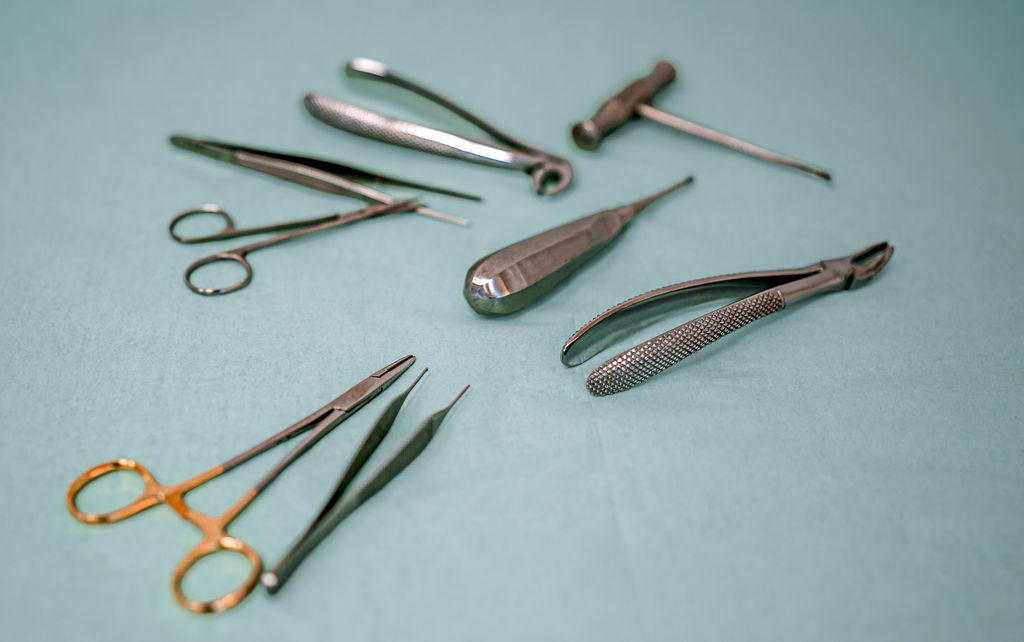
If the tooth cannot be easily accessed, or if the tooth that needs to be removed no longer has its crown, oral surgery may be required.
The most common oral surgical procedure is the removal of wisdom teeth.
In some cases, supernumerary teeth also need to be removed to prevent them from causing problems later on.
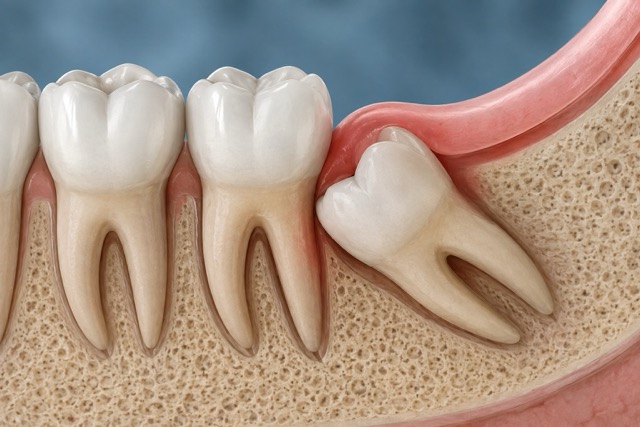
A common oral surgical procedure is the removal of a dental cyst. It must be surgically removed, as it can lead to further complications. The presence and growth of a cyst may not cause pain for a long time, so it is most often discovered incidentally on an X-ray taken in connection with another procedure. The absence of pain does not mean that it is harmless! If the cyst is not removed, bone destruction may occur, and as the cyst grows, it can also cause teeth to shift. It is important that treatment is carried out as soon as possible.
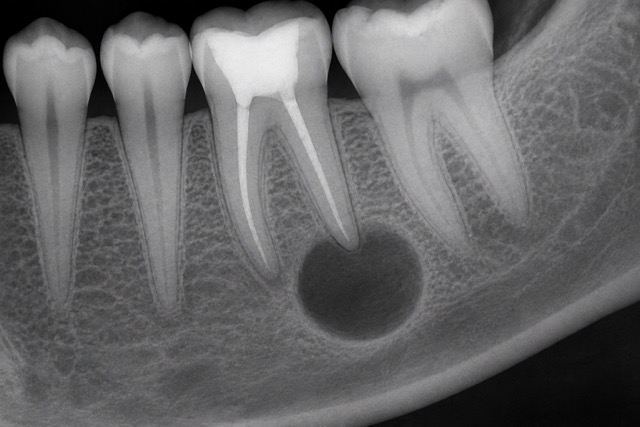
This surgical procedure is most commonly considered in cases of previously root canal-treated teeth. Chronic inflammation around the root tip (visible on an X-ray), as well as pain around the root tip, may draw attention to the affected tooth.
The cause is usually an inadequate root canal filling. However, it can also occur in well-filled root canals due to dense branching in the apical third, where bacteria can more easily colonize.
The inflammation that has developed may be considered a source of infection in the body.
The inflamed tissue around the root tip, as well as the upper third of the root tip, is removed, making it possible to preserve the tooth.
Of course, before the procedure, it is always necessary to consider what is best for the patient.
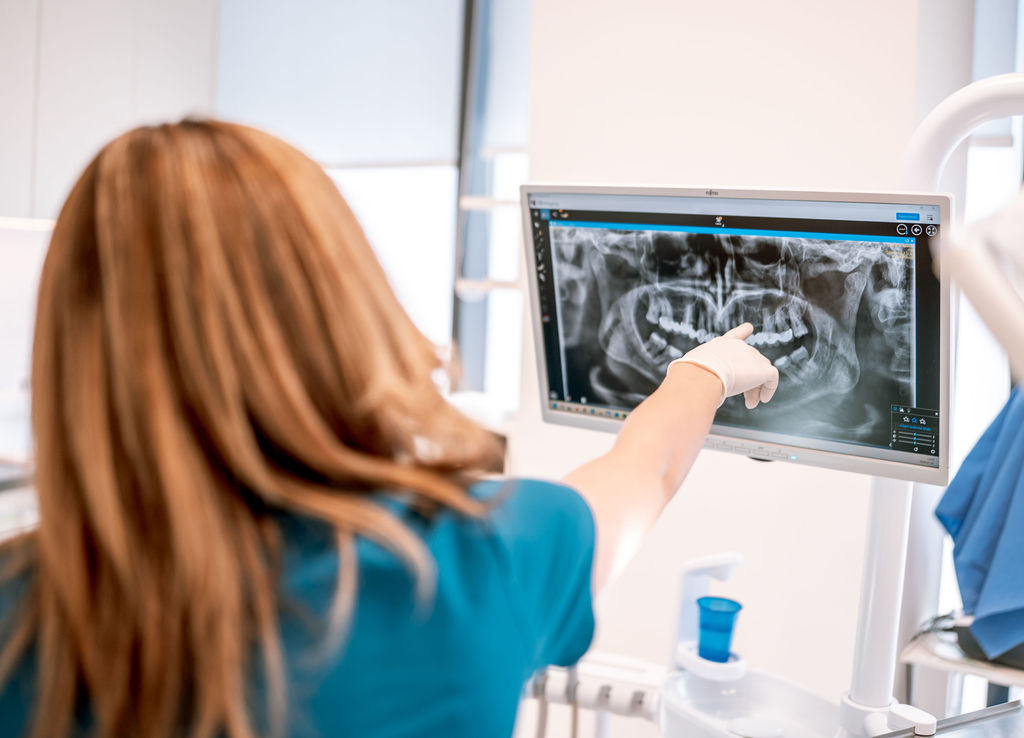
Surgical release of a shortened or attached lip or tongue frenulum.
This procedure may be necessary, for example, when implant placement is not possible because the bone has resorbed. This can occur when a patient postpones implant placement for a long time. Advances in oral surgery make bone grafting possible through the use of various bone graft materials, which are accepted by the body and integrate well.
If there is insufficient bone in the area of the upper jaw beneath the maxillary sinus, this procedure may be necessary. In such cases, the bone beneath the sinus is augmented. Bone grafting procedures are generally safe, although depending on the amount of bone being replaced, the procedure and healing period may be longer.
Implants can be placed depending on the healing process and the amount of available bone.
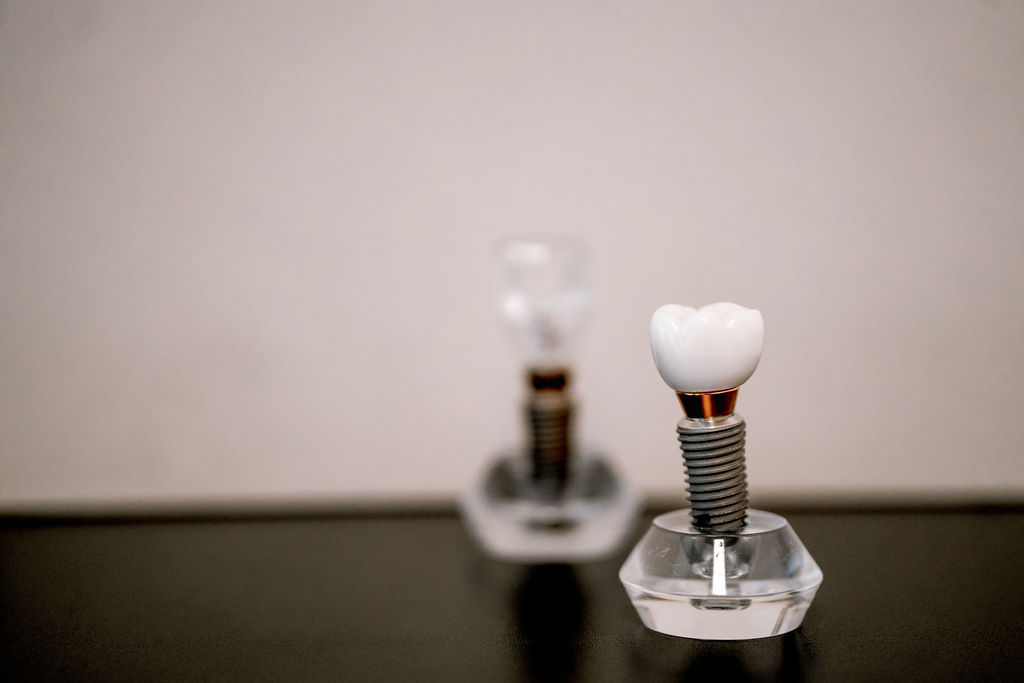
Implants can be used to replace one or more missing teeth. They make the treatment of edentulism simpler. An implant can also be referred to as an artificial tooth root, which allows a dental restoration to be securely fixed in place. Implants function in the bone in a similar way to natural tooth roots. One or more missing teeth are not only an aesthetic but also a functional problem. The balance of chewing can be disrupted, and even the remaining teeth and the bone may become damaged. Therefore, it is advisable to replace missing teeth with implants so that the problem can be resolved as soon as possible.
How is implant placement performed?
A dental implant is an artificial tooth root made of titanium. The dental implant is placed into the bone, and the implant abutment is then attached to it. The crown is placed on the implant abutment.



4.9/5
Google Rating
20+
Years of experience
10.000+
Happy patients